What is orthopedic hardware removal, and when does it make sense?
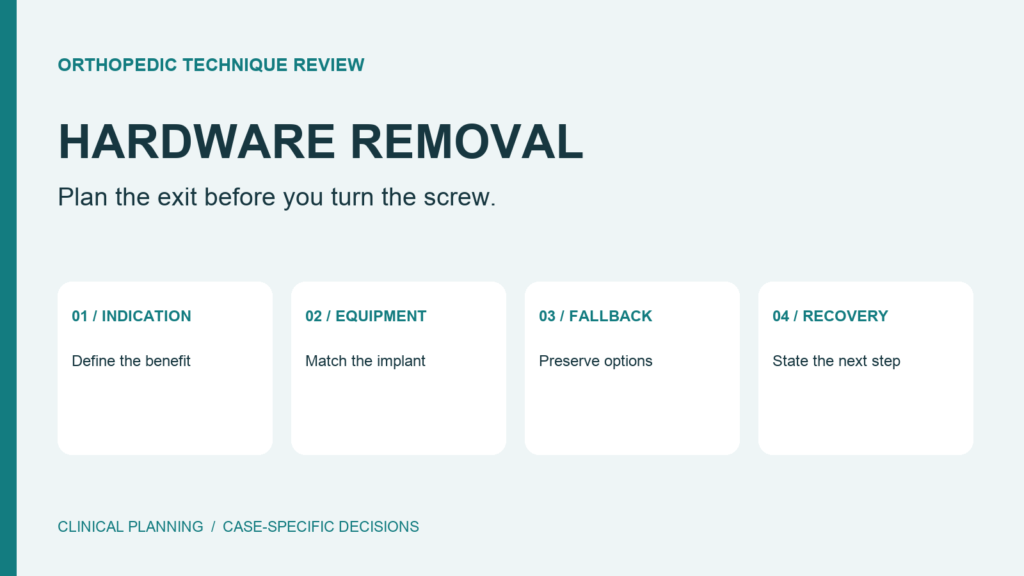
Orthopedic hardware removal is surgery to take out plates, screws, nails or other devices used to hold bone in place. A healed fracture does not, by itself, make removal the next step. The reason must be clear. Pain linked to a prominent implant, infection, failure of fixation or a planned revision can raise different questions. They do not all call for the same plan. The supplied teaching article makes a useful point: a request to remove metal needs a discussion of benefit and harm. First ask what problem the operation is meant to solve. Then ask whether the implant is the likely cause. Pain may persist if the source lies elsewhere. Timing also depends on union, the bone involved and the purpose of treatment. A date on a calendar is not proof that the limb is ready.
Name the risk before calling the operation routine
Common surgery is not risk-free surgery. In a 2021 study by Kellam and colleagues, 13,089 hardware-removal-only procedures from the American Board of Orthopaedic Surgery case database had a reported overall complication rate of 9.6%. The data covered 2013 through 2019 and reflected a cohort of recently trained US surgeons. This is context, not a personal risk score. Events included wound problems, infection, further surgery, nerve injury and fracture. For orthopedic hardware removal, consent should address the actual site and the planned approach. A deeply buried fragment may be harder to reach than the X-ray suggests. The team may need a wider exposure, may leave part of the implant in place, or may stop if further work would cause undue harm. Those possibilities belong in the discussion before the incision, not as a surprise after it.
Match the tools before the first turn
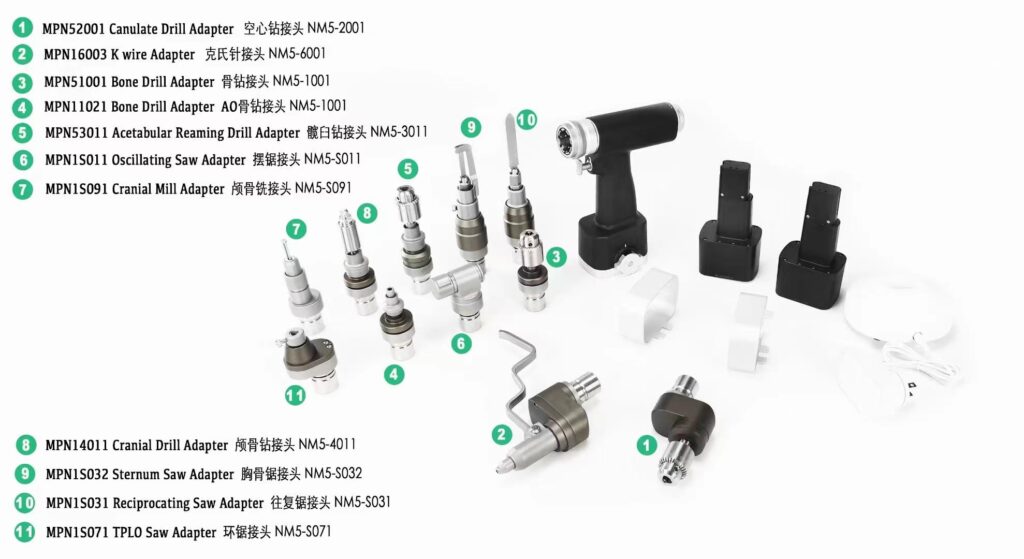
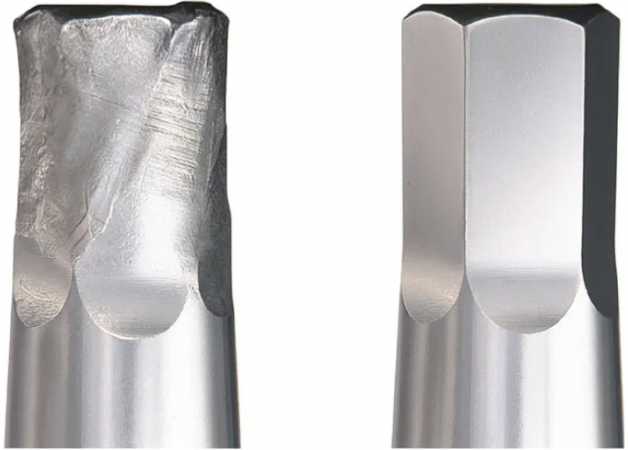
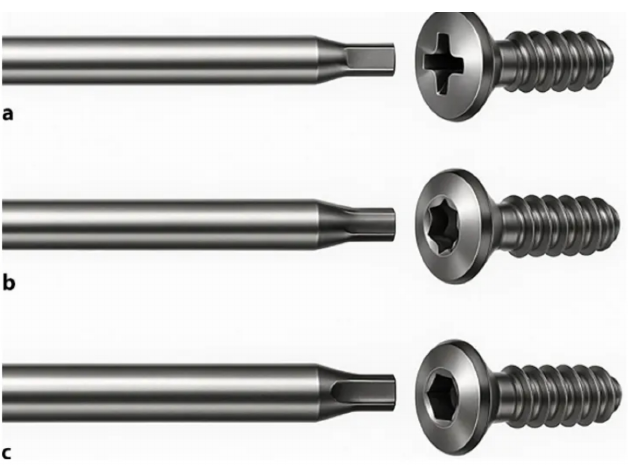
A driver that almost fits is the wrong starting point. Orthopedic hardware removal starts with knowing what was implanted: the system, screw recess, sizes and any earlier damage. The source stresses the value of the first operative record and tools in good condition. Its images contrast a worn driver with an intact one. That small detail matters. Poor engagement can turn a removable screw into a damaged recess. The plan should include the correct drivers, suitable extraction tools and a fallback set checked before the case. AO Foundation guidance on difficult nail removal also highlights the implant details, old operation report and availability of the right equipment. A tray label alone does not prove that the needed component is inside. Check the parts. Check their condition. Make the backup plan real while there is still time to obtain what is missing.
A stuck screw needs a new assessment, not blind force
More force can make the next step harder. The source separates several causes of difficult orthopedic hardware removal: a damaged screw recess, a broken shaft, bone overgrowth and a locked screw head bound to its plate. These are different problems. An extractor suited to one may not solve another. The teaching figures show tools for damaged heads and buried fragments, but the drawings are not a universal sequence for every device. The surgeon needs to assess access, remaining bone and nearby structures before changing methods. If metal cutting is needed, heat and debris become part of the safety plan. Repeated attempts with poor purchase can destroy the remaining grip. The aim is to preserve options. Identify what is resisting removal, choose an approach matched to that cause, and reassess when the expected response does not occur.
Broken fragments and nails require a clear stopping point
Complete extraction is not worth unlimited damage. During orthopedic hardware removal, the value of retrieving a deep fragment must be weighed against the tissue and bone needed to reach it. Infection, symptoms, location and the next planned operation all affect that judgment. A retained piece is not automatically harmless, but its presence alone does not settle the choice. The source also shows why nails deserve their own plan: access to the end, the extraction connection and any broken segment can each create a distinct obstacle. This is where a prepared fallback matters most. The team should agree what finding would justify more exposure and what finding would prompt a change of plan. Document what came out, what remains and why. That record supports later care far better than a vague note that removal was difficult.
The operation ends with a recovery plan, not an empty tray
Metal out does not mean full strength restored. Orthopedic hardware removal can leave screw holes and areas of bone affected by the extraction. The source therefore stresses review of the final result and a recovery plan suited to the case. Do not turn its example time windows into a rule for every patient. Loading, sport and follow-up depend on the site, bone quality, healing and the work done. The handover should state the restrictions clearly and explain when to seek review for wound concerns or new symptoms. An editorial checklsit can help keep teaching discussions focused on the whole pathway. Was there a clear reason to operate? Were the tools matched? Was the result checked? Was the recovery plan understood? The strongest outcome is a justified procedure with documented decisions and a clear next step for the patient.
- Confirm the indication and evidence of healing.
- Identify the implant and verify the extraction equipment.
- Plan for damaged components and protect surrounding tissue.
- Record retained material and the recovery restrictions.