
Which nonunion treatment options actually address the cause?
Nonunion treatment options work best when they target the reason a broken bone has stopped healing. That may mean making the bone stable, helping the bone heal, treating an infection, or rebuilding missing bone. More treatments do not make a better plan. Finding the cause does. This guide looks at the twelve groups in the source article, from screws and plates to methods still under study. These choices are not equal. Some work as a pair. A delayed union is healing more slowly than expected; a nonunion needs a fresh review of why progress has stalled. Pain and repeat X-rays matter. So do the skin and the care given before. Use the sections below to understand the discussion with a bone specialist, not to choose a procedure from a menu.
- Methods 1-6: fixation and graft-based reconstruction.
- Methods 7-11: selected adjuncts with differing evidence and indications.
- Method 12: a research approach, not routine care.
1. Screw fixation: useful when the bone and fracture pattern fit
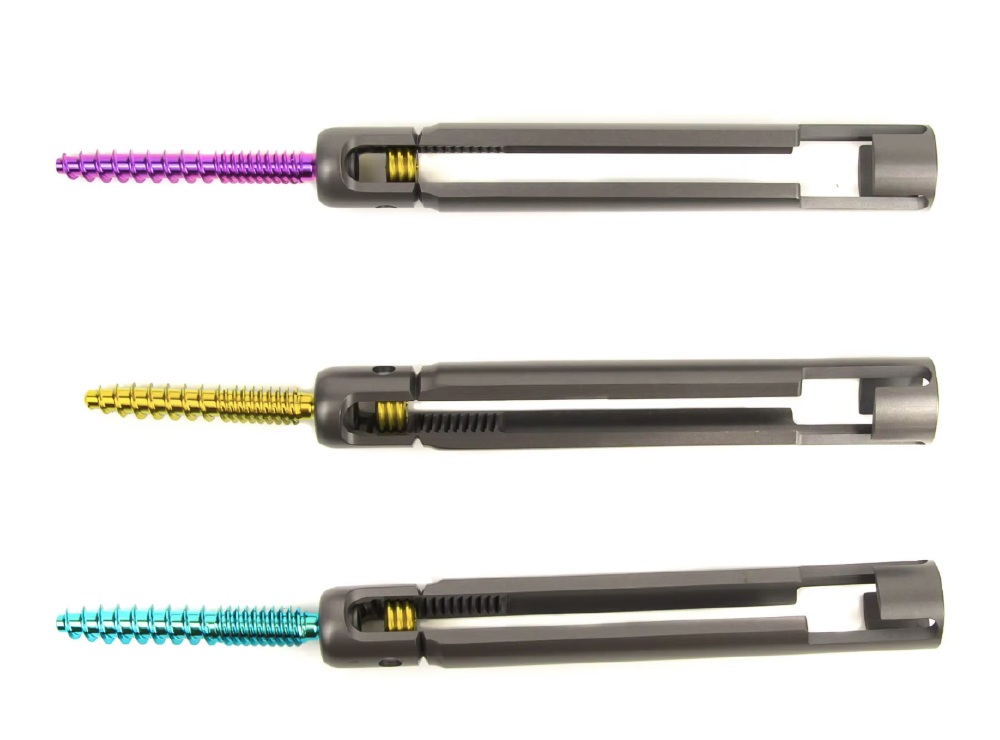
Screw fixation can bring selected bone fragments into firm contact. It may suit a small bone, such as the scaphoid in the wrist, or a fracture near a joint where the pieces can be held securely. It is not a universal answer for a long bone that bends and twists under load. The shape of the break, bone quality, and size of each fragment show whether screws alone can give enough support. Among nonunion treatment options, this is a focused solution to a specific problem with movement. If the fragments cannot hold a screw well, or a gap remains, the plan may need extra support or graft. The goal is stable contact while preserving blood supply. A smaller implant does not always mean an easier recovery, and loading still follows the treating team’s plan.
2. Plate fixation: correct the problem that the first construct missed
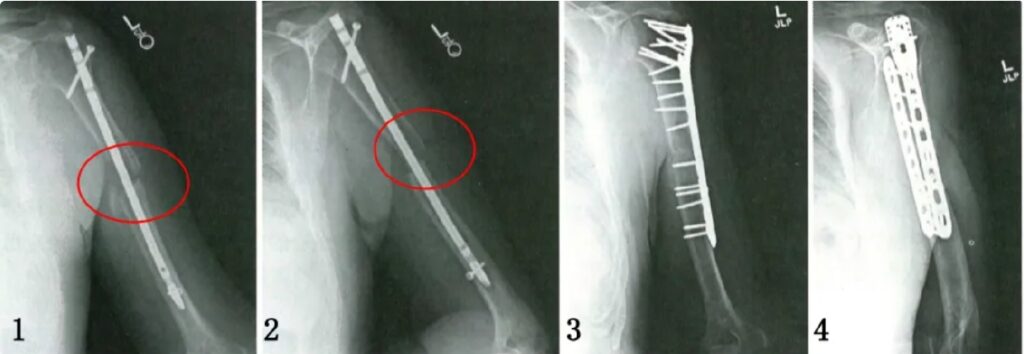
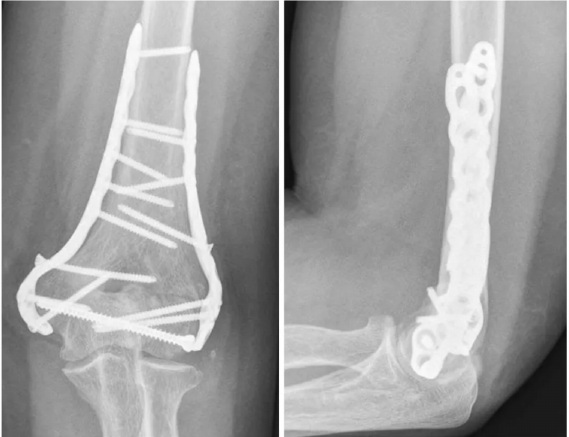
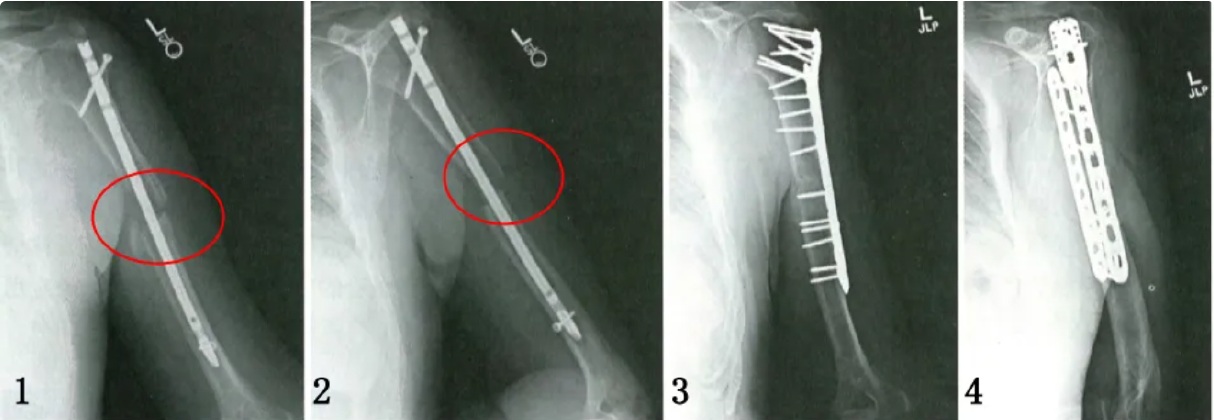
A plate and screws can restore alignment and control movement at the nonunion. A failed plate may need to be changed. In some cases, a plate adds support to a nail. The surgeon must decide whether compression, added stability, bone graft, or a combination is needed. Simply installing more metal leaves the original cause unanswered. These nonunion treatment options are most useful when the fracture is poorly aligned or the current fixation cannot control the loads on it. Skin and muscle cover and blood flow at the site also shape the approach. The source images show a humeral case treated with plate fixation after a nail. They show one approach. They cannot predict success. The best construct is the one that fits the bone, the healing goal, and the demands of that limb.
3. Intramedullary nailing: a new rod needs a clear purpose
An intramedullary nail sits inside the canal of a long bone. For selected shaft nonunions, revision may involve removing the old nail and placing a better fitting one. The aim is to improve the way the bone bears load and, when needed, help new bone grow as the canal is prepared. Yet exchange nailing is not right for every site or every gap. The surgeon checks whether the bone is straight. Locking, bone loss, and signs of infection also need review. When comparing nonunion treatment options, ask what the new nail will change that the old one could not. A larger rod alone will not solve all forms of failure. Some cases need a plate, graft, or a different repair instead. The orthopedic patient guide to nonunion describes revision fixation and grafting as treatments that may be combined to address different needs.
4. External fixation: valuable when the local conditions are difficult
An external fixator connects the bone to a frame outside the limb through pins or wires. It can provide stability while allowing access to damaged skin and other soft tissues. This makes it useful in selected cases with infection, bone loss, or deformity. Some frames also allow slow changes or bone transport with close expert care. These are demanding nonunion treatment options, not quick shortcuts around surgery. Pin sites need care. Joints need a safe plan to move. The time in the frame and repeat visits also affect daily life. Pin tract infection and stiffness are real concerns. The team needs a plan for both the bone and the person living with the frame. When infection is present, fixation forms only one part of care; removal of infected tissue and a plan to control the infection remain essential.
5. Combined internal and external fixation: two tools, one plan
In selected complex repairs, a surgeon may use internal and external fixation together or in planned stages. One component can help keep the bone straight while another supports correction, lengthening, or the healing phase. That does not mean two devices are always stronger or safer than one. Each has a role. Each adds risks and extra care needs. These nonunion treatment options need a clear plan for each stage, the soft tissues, and the risk of infection. The patient should understand why both methods are needed and what must happen before the frame can be removed. Ask what each device does. Ask how progress will be measured. A combined approach earns its place when it solves a defined problem that a simpler construct cannot solve, instead of just adding more metal.
6. Bone grafting: support healing where biology or bone stock is lacking
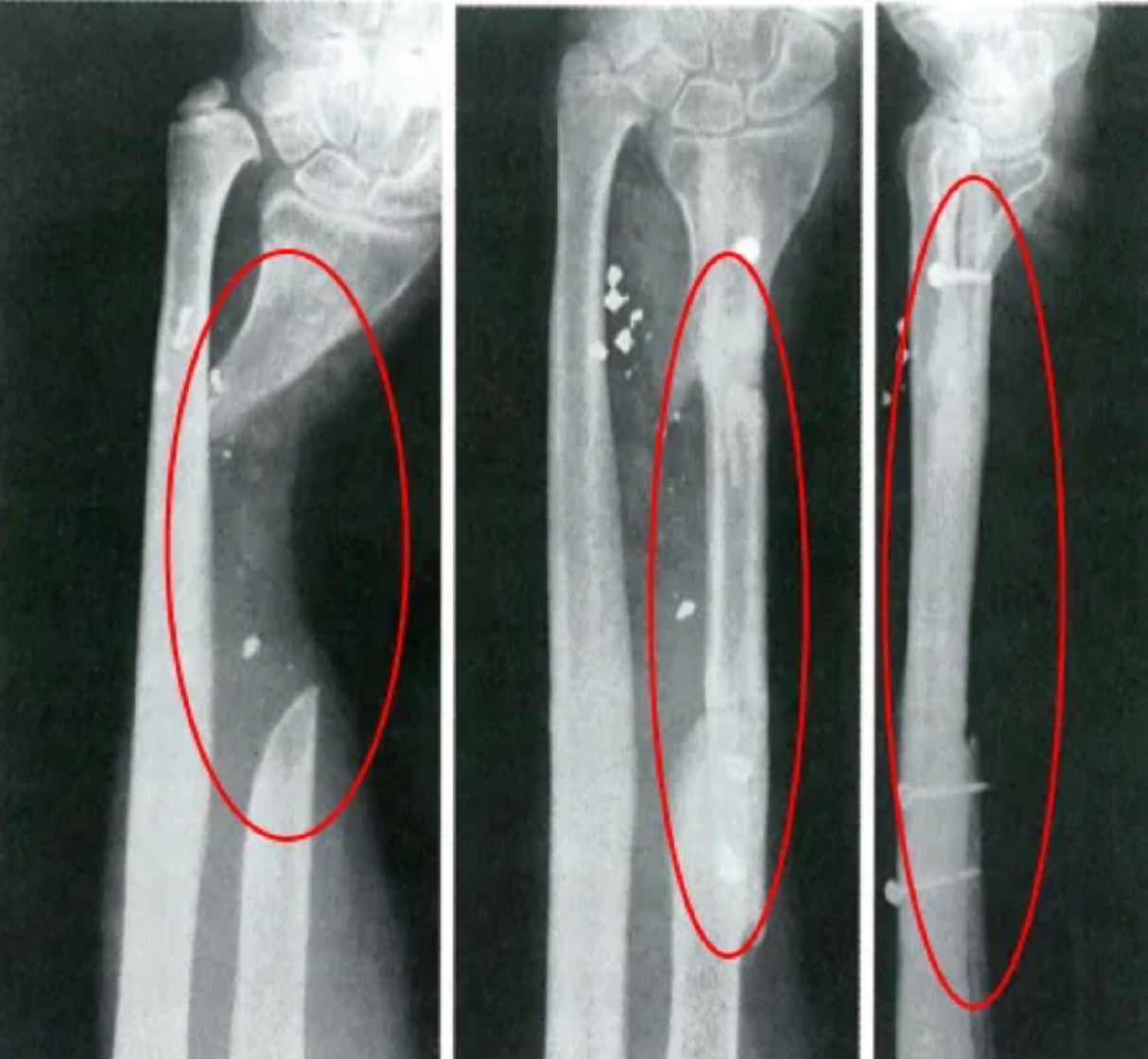
Bone grafting adds material to help repair a site that cannot heal well or fill a defect. Graft from the patient’s own body can provide living cells, a scaffold, and signals for bone formation. Donor bone and substitutes have different roles and limitations. The gap and blood supply guide the choice. Earlier surgery and the wider plan matter too. Among nonunion treatment options, grafting often supports fixation rather than replacing it. A graft cannot rescue an unstable construct on its own. Harvesting autograft also creates another surgical site, with pain and other risks. The source illustrates reconstruction of a forearm defect with a fibular graft. That example should not be read as a promise for every case. Some viable, unstable nonunions may heal after better fixation without the same type of graft.
7. Local injections and biologics: ask what is being injected and why
The term biologic injection covers very different materials. Bone marrow concentrate, platelet-rich plasma, and growth factors are not the same. A study of 60 noninfected tibial nonunions reported healing in 53 patients after concentrated marrow grafting, but it was not a randomized comparison proving that all patients should receive it. The chosen cases and cell count mattered. When discussing these nonunion treatment options, ask whether the evidence applies to the same bone, defect, and infection status. An injection cannot straighten a limb or secure loose fixation. The source also lists several drug-based approaches; mentioning them does not establish routine use. Access varies. So do the approved uses and the proof behind them. The useful question is what added benefit the planned treatment offers beyond a sound mechanical and biological treatment plan, and what is still unknown.
8. Low-intensity pulsed ultrasound: a possible adjunct, with uncertain benefit
Low-intensity pulsed ultrasound, often shortened to LIPUS, applies sound waves through the skin at the fracture site. It is attractive because it does not require a cut in the skin. It may be easy to use. That does not prove it will help a given nonunion. The procedure guidance for delayed union and nonunion finds the proof of benefit too weak and calls for close oversight, clear consent, and review or research. It also places the method alongside other care under a specialist. Within nonunion treatment options, ultrasound needs clear limits. It cannot correct major deformity, remove infection, or repair broken hardware. If offered, agree on how progress will be checked and when the plan will change if healing does not advance. Repeating sessions without review is not a plan.
9. Shockwave therapy: promising results need the right context
Extracorporeal shockwave therapy delivers focused pressure waves to the target area. A randomized trial involving 126 patients studied hypertrophic long-bone nonunions and found similar six-month rates of bone healing in its shockwave and surgery groups. That result applies to the cases studied. It does not make shockwave a replacement for all revision surgery. A large defect, infection, or failed fixation is a different problem. When comparing nonunion treatment options, keep the type of case linked to the claim. Ask which type of nonunion it can help. Ask for proof of benefit. Then ask what comes next if it fails. An appealing treatment label should never hide those details. This approach may be considered in selected settings, but a bone specialist must first show whether the limb has the stability and local conditions needed for healing.
10. Electrical and electromagnetic stimulation: support, not structural repair
Electrical or electromagnetic stimulation aims to influence the healing response without replacing the fracture’s physical support. Some devices are applied externally and require regular use over a planned period. The exact schedule depends on the prescribed device and the case. A cast, brace, or existing fixation may still be needed. These nonunion treatment options make most sense as part of a monitored plan for a well chosen case. They do not close a major bone defect, correct shortening, or remove infected tissue. Ask how the team will judge progress and what would trigger a change in treatment. More time using a device is not proof of more healing. Symptoms and repeat scans must guide review. Ask the treating doctor which device fits the case. Learn how to use it safely and what limits still apply.
11. Hyperbaric oxygen: a plausible idea is not proof of union
Hyperbaric oxygen therapy supplies oxygen in a chamber at raised pressure. The proposed benefit is improved oxygen flow to tissue, but a sound theory does not prove that it can make a stalled fracture heal. An evidence review of fracture healing and nonunion, with searches through 2012, found no suitable trials with random group assignment to show whether it helped. Its age also limits what it can say about today’s practice. Among nonunion treatment options, oxygen therapy should not be presented as a proven stand-alone solution. If a specialist proposes it for a separate wound or infection-related reason, ask how that indication differs from proving bone union. Ask about time and cost. Discuss health risks and side effects as well. It cannot take the place of the mechanical and infection care that the fracture itself requires.
12. Gene therapy: a research direction, not a routine shortcut
Gene-based treatment seeks to make cells produce signals that support bone repair. The source describes it as an exploratory approach, and that distinction matters. A mechanism demonstrated in a laboratory or animal model is not the same as a treatment shown to work safely in people with established nonunion. The dose needs study. So do the way it is given, how long it acts, and unwanted effects. Discussions of nonunion treatment options should place this category in the research section, separate from standard fixation and grafting. If a clinical study is offered, patients need the study plan, who can join, known risks, and follow-up needs explained clearly. They should also understand the standard care offered outside the study. The promise is worth investigating. It is not a reason to delay a needed bone repair or accept a claim of certain bone regrowth.
How should you choose among the twelve approaches?
Start with the cause, then build the plan. Check that the bone is stable and straight. Review bone loss, blood supply, and infection risk. Can the patient follow the rehab plan? These factors narrow the nonunion treatment options far more usefully than a ranking from best to worst. Fixation may address movement; graft may support poor bone growth; selected adjuncts may have a supporting role. None guarantees healing. Keep a simple checklsit for the consultation: what failed, what will change, how progress will be measured, and what happens if the first plan fails. Recovery also needs clear guidance on loading, wound care, and follow-up. Report drainage, fever, or worsening symptoms promptly. The goal is not to collect treatments. It is to choose a clear plan that addresses the reasons the bone has not united and helps the limb work well.
- What is blocking healing? Movement, poor biology, infection, a gap, or several causes?
- What will this treatment change? Ask for the role of every procedure or device.
- How will we track progress? Agree on review dates and the next step if healing stalls.