

What do orthopaedic trauma updates 2026 actually change?
More treatment is not always better care. Orthopaedic trauma updates 2026 point to a harder task: match the choice to the patient, the injury and the result that matters. This review follows themes from the 2026 JBJS update and checks key claims against linked research. It covers fracture fixation, elbow care, ankle loading, infection and clot prevention. It is a selective review, not a list of every paper published this year. Several trials came out before 2026 and remain part of the current debate. That date distinction matters. A fresh headline does not make an old study new. Nor does a strong implant make a weak claim true. Read the official JBJS overview for the wider context. The question throughout is simple: what changed, for whom, and how sure can we be?
- Fixation: assess the whole construct.
- Recovery: check who can follow an earlier loading plan.
- Risk: keep infection and clot endpoints distinct.
A locked plate cannot erase poor alignment
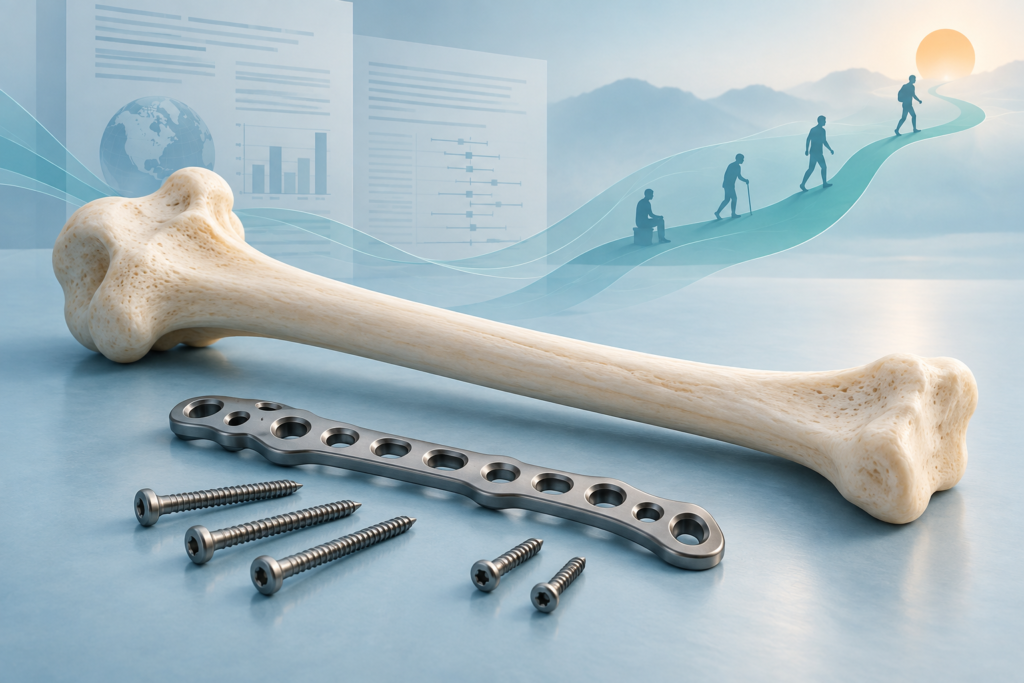
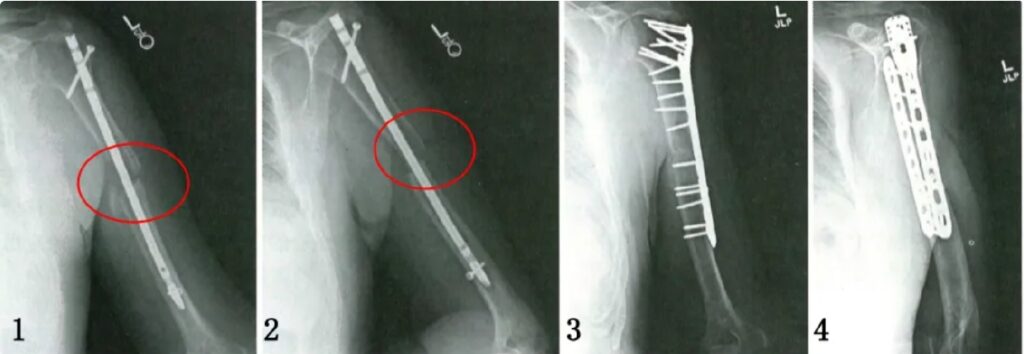
A plate is a tool, not a promise of union. In a study of 560 distal femoral fractures treated with lateral locked plates, 54 patients had another operation to help the bone heal. That was 9.6% of the group. Broken inner cortex, a fracture split into many pieces, and inward or outward tilt were linked with a higher risk of nonunion. These are findings from an observational study, not proof that one factor caused each failure. The primary study also found that the best screw layout remains unclear. Do not turn one reported screw-density threshold into a rule for every bone. For readers tracking orthopaedic trauma updates 2026, this is a useful check on sales language. Judge the whole construct and the injury it must serve. A catalogue image cannot show whether a proposed plan fits the case.
For some older patients, elbow surgery is not the only answer
The SOFIE trial tested a question worth asking before booking theatre time. It enrolled 60 people aged at least 75 with a closed, displaced, isolated olecranon fracture. Surgery used wires or a plate; care without surgery used a sling for comfort and early movement as tolerated. At 12 months, the trial found no significant difference in its main arm-disability score. Active elbow extension did favour surgery. Read both findings together. The 2025 trial report supports care without surgery as a reasonable option for selected older people with stable injuries. It does not prove equal results for every patient, every fracture, or every goal. Within orthopaedic trauma updates 2026, the lesson is about choice. Age alone is a poor substitute for a discussion of daily tasks, elbow strength, health and the burden of an operation.
Early ankle loading is a pathway, not a dare
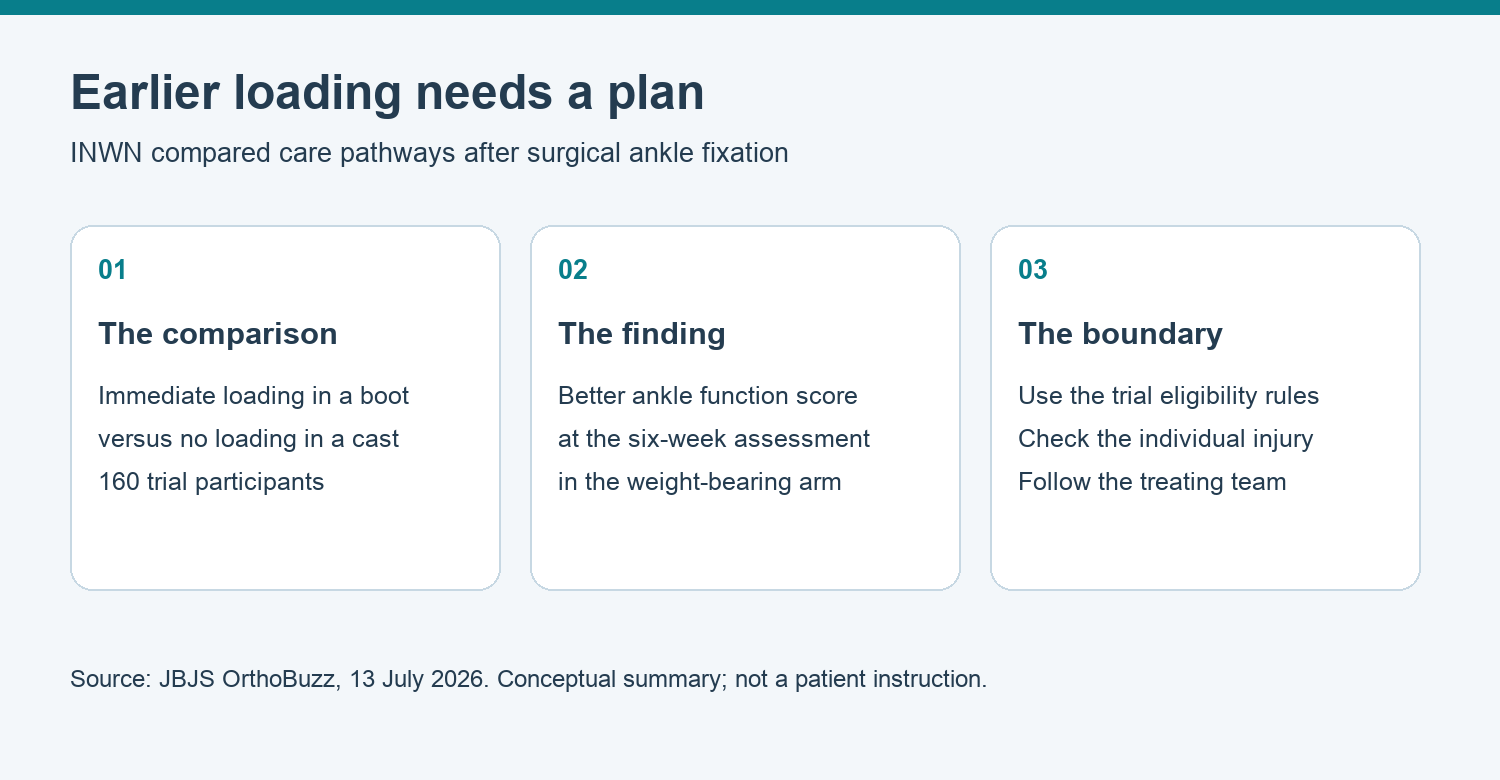
Keeping weight off an ankle for longer should have a reason. The INWN trial, highlighted in the JBJS update, compared immediate weight-bearing in a boot with no weight-bearing in a cast after surgical fixation. Each group had 80 patients. The weight-bearing group had a better ankle function score at six weeks. That is a useful finding, but the trial compared two care pathways. It did not test a blanket order to walk on any fracture. A boot, the type of repair and the rules for entry into the study all shape what the result means. Orthopaedic trauma updates 2026 should prompt a review of routine delays, not a race to discard support. Patients need a clear loading plan from their treating team. They also need to know when to stop and seek review if the plan is not going well.
Oral antibiotics: read the analysis before the headline
An IV line is not proof of better infection care. Yet a pill is not proof of an easy cure. The POvIV trial studied 233 patients with fracture-related infection and no X-ray evidence of bone infection. Its main measure was the number of operations within one year. Oral treatment met the trial’s noninferiority test in the main modified intention-to-treat analysis. The planned per-protocol analysis did not support that finding. The authors report this uncertainty, and so should anyone quoting them. Here, noninferiority means meeting a set statistical margin for a named outcome. It does not mean the routes are the same in all respects. For orthopaedic trauma updates 2026, the useful point is that route choice deserves review. It remains a clinical decision tied to the infection, available drugs and the full care plan, not a slogan about replacing every IV course.
Aspirin: the endpoint changes the story
The PREVENT CLOT trial makes one distinction impossible to ignore. Among 12,211 patients, aspirin was noninferior to low-molecular-weight heparin for death at 90 days. But deep-vein thrombosis occurred in 2.51% of the aspirin group and 1.71% of the heparin group. Death and a clot in the leg are different outcomes. A headline that merges them loses the point. The 2023 trial included adults with surgically treated limb fractures or pelvic or acetabular fractures. Its mean age was about 45. That helps define the setting; it is not a template for every frail older patient. Orthopaedic trauma updates 2026 bring such earlier evidence into today’s review of practice. They do not turn a trial into a personal prescription. Drug choice still calls for a plan that weighs the person’s clot risk, bleeding risk and clinical context.
What should teams ask before changing practice?
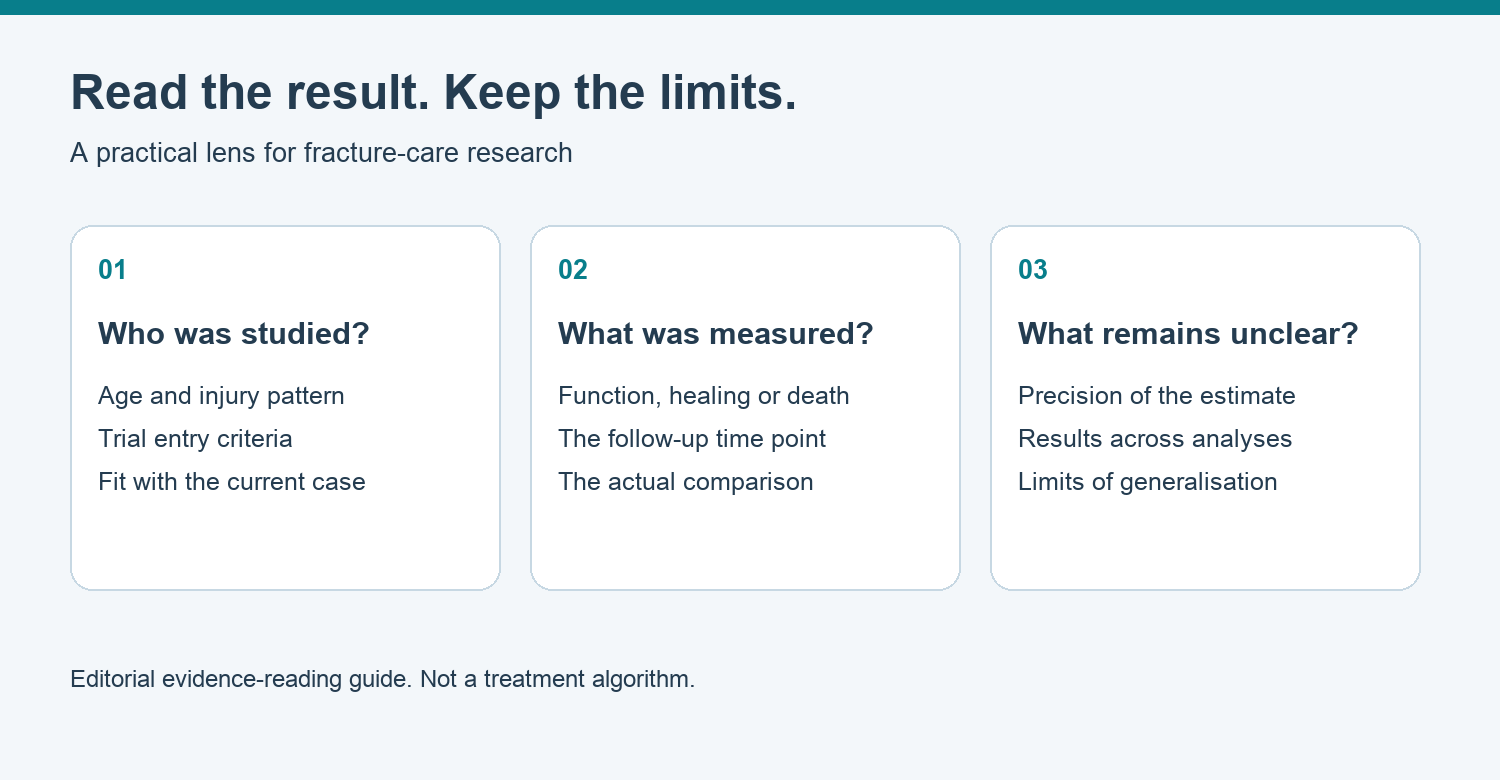
The strongest response to new evidence is a better question. Start with the patient group. Then name the outcome and the time point. Check whether the result came from a trial, a records review or a lab test. Those designs answer different questions. For buyers and clinical teams reading orthopaedic trauma updates 2026, this discipline also improves product discussions. Ask for the intended use, size range, instrument needs and the evidence behind each claim. Keep a short checklsit so a polished sales pitch cannot hide a gap. Do not treat the findings here as proof that a named brand gives better results. This article tests ideas, not products. Its central message is practical: demand a clear link between the claim and the study. Then leave room for the person whose injury does not fit the average. That is where careful judgement earns its place.