
Does a healed fracture mean the nail must come out?
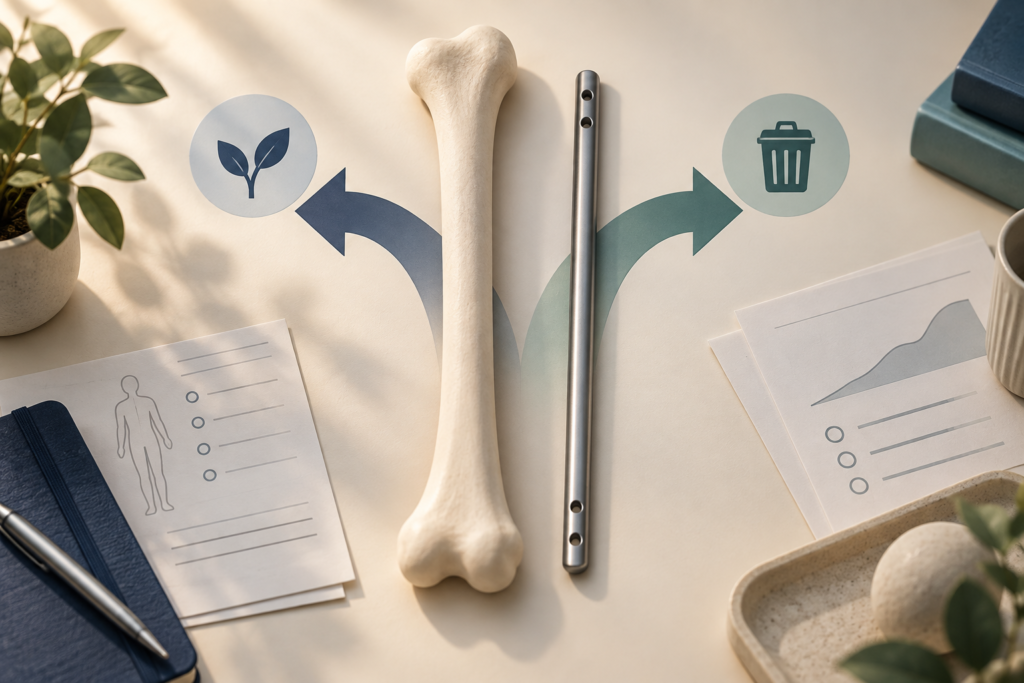
No. Intramedullary nail removal is not routine for every adult with a healed fracture. A metal rod inside the bone is not, by itself, a reason for another operation. AO Surgery Reference advises that nails generally do not need removal unless they cause symptoms. The useful question is what taking it out would improve. This guide focuses on adult thighbone and shinbone shaft fractures treated with rigid nails. It does not set rules for children, growing bones or every type of hip implant. Being young, playing sport or disliking the thought of metal is a reason to talk, not proof that surgery will help. The bone has healed. That is one goal. A second operation needs its own clear purpose. Start with symptoms, the scans and the risks of removal. A calendar date cannot make that choice for you.
- Comfortable and healed: discuss whether leaving the nail in place is reasonable.
- Persistent symptoms: assess the cause and realistic benefit of surgery.
- New concerning signs: seek clinical assessment promptly.
Will taking the nail out stop the pain?
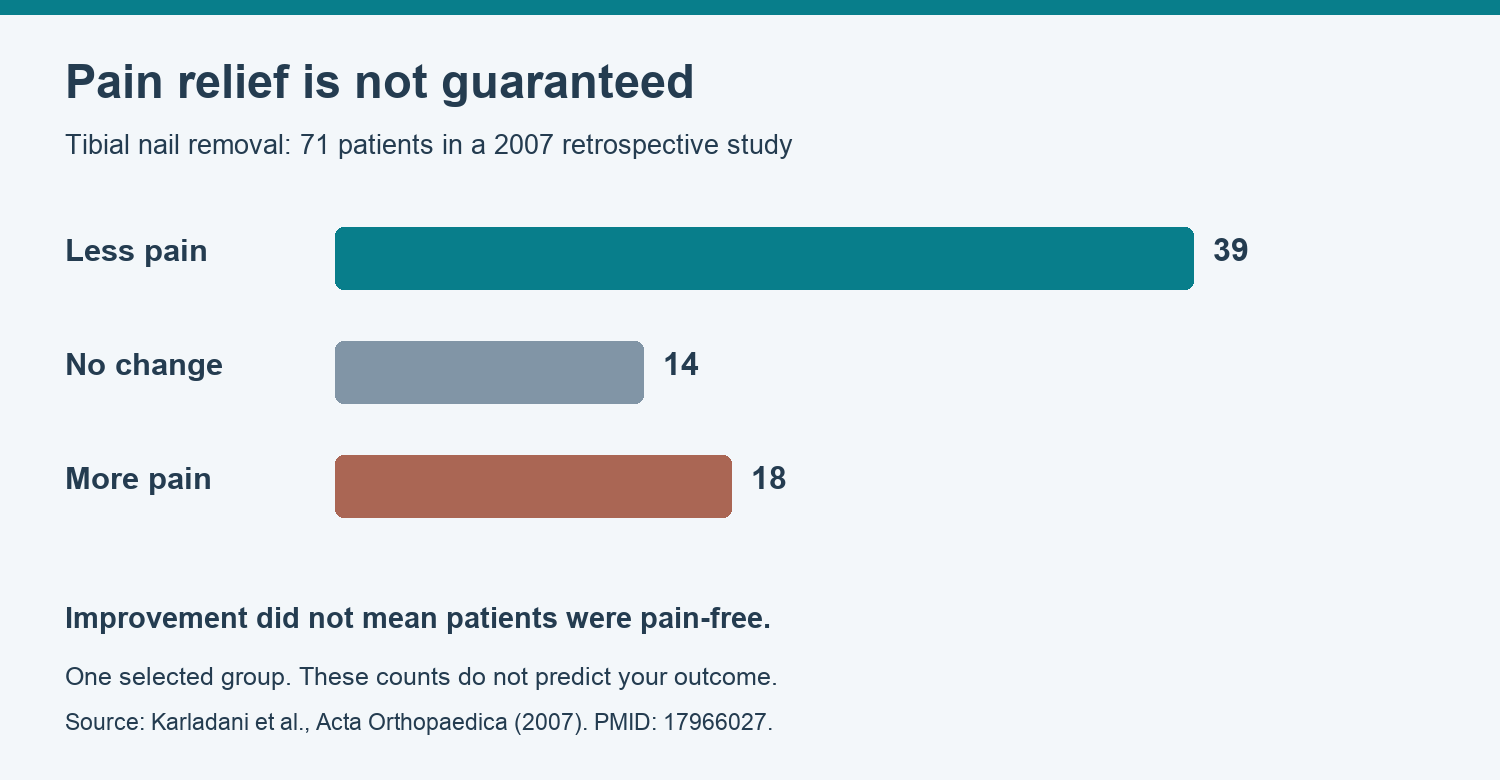
Pain relief is possible, but it is not a promise. In a 2007 retrospective study of 71 patients, 39 had less pain after tibial nail removal, 14 had no change and 18 had more pain. Even those who improved were not pain-free. A 2017 prospective study followed 57 patients and found reduced knee pain in the group with moderate or severe symptoms, especially when the nail tip lay close to key bone landmarks. These were small studies. They asked different questions in selected groups. Neither supplies a personal success rate. Before intramedullary nail removal, ask the surgeon to link the pain to a likely cause. Where does it hurt? What brings it on? Does the examination fit the scan? A sore knee is a symptom, not proof that the whole rod is at fault. Get a clear explanation before trading one problem for another wound.
Which symptoms deserve prompt assessment?
New drainage, worsening redness, warmth or swelling should not be filed under normal implant discomfort. Fever or pain that keeps getting worse also needs medical review. The American Academy of Orthopaedic Surgeons describes these as possible signs of infection after a fracture. They can occur even after the original injury has healed. Do not wait for a planned intramedullary nail removal appointment if such signs appear; contact the treating team promptly. Infection care may need tests, antibiotics and further surgery. It is not simply a request to pull out metal. Likewise, a new injury or a sudden loss of the ability to bear weight calls for assessment, not a guess from an old X-ray. This article cannot tell whether a particular nail is infected, loose or broken. The point is to separate a planned discussion about comfort from a new problem that needs attention now.
When is the right time for removal?
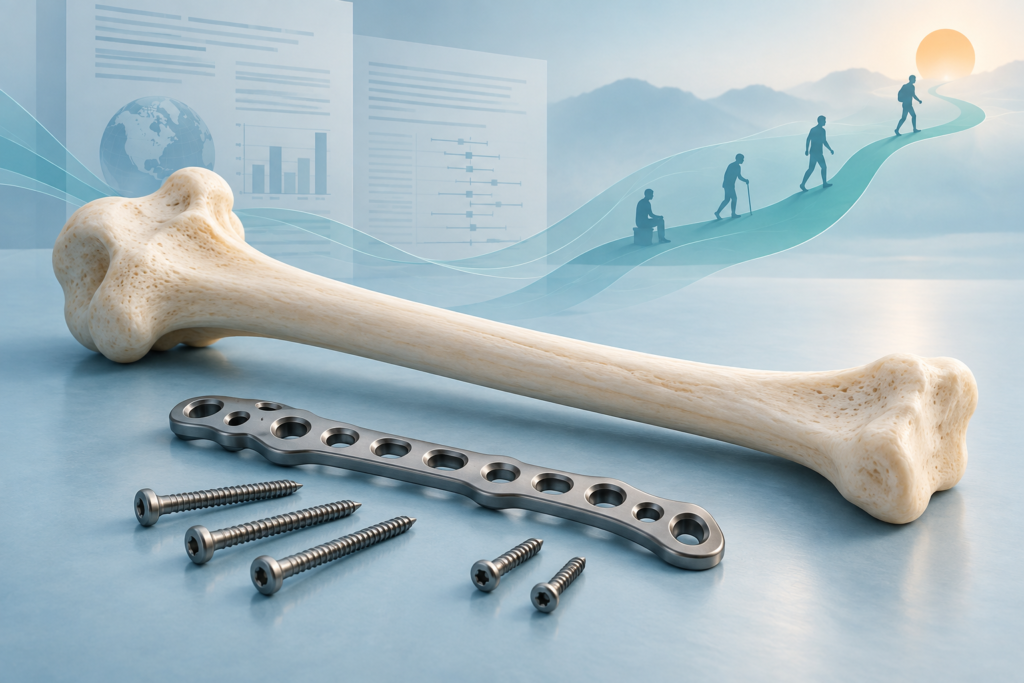
Bone healing matters more than an anniversary. There is no single removal date that fits every fracture, nail and patient. For elective intramedullary nail removal, the treating surgeon must first confirm that the fracture has united. That judgement combines the images with the clinical picture. In its tibial nailing guidance, AO places removal after complete bone remodelling, usually at least 12 months after surgery. This is context for one treatment pathway, not a deadline or a booking rule. Do not turn it into a claim that every rod should come out at one year, or that waiting two years proves the bone is ready. Ask what the latest images show. What is still unclear? If urgent treatment is needed for a complication, the plan can be different. That decision belongs to the team managing the fracture, not to a timetable copied from a general article.
How risky is a second operation?
Calling it a small operation does not make the risks small for you. Intramedullary nail removal can be difficult when screws are broken or bone has grown around the hardware. A 2018 retrospective study of 389 tibial nail removals recorded 21 mechanical complications, or 5.4%. These included fractures caused during the procedure, nerve injuries and failure to remove the nail. Fifteen cases involved a fracture caused during surgery. Those figures come from one hospital’s series; they are not a forecast for every surgeon, implant or patient. They do show why planning deserves respect. Ask whether the team has the original implant details, current images and the right extraction tools. The study highlighted problems with broken or missed locking screws. Consent should cover what happens if removal proves difficult or cannot be completed. A good plan includes the awkward possibilities, not just the expected result.
Does an MRI scan require the nail to be removed?
An MRI request is not an automatic reason to remove a nail. The exact device matters. So does its safety label. Saying that a rod is titanium does not settle the question. The US Food and Drug Administration says that devices labelled MR Conditional must meet all stated scan conditions. Devices with no MRI safety information should be treated as unsafe until properly assessed. Bring the implant card or operation record to the imaging team so they can identify the device and check its labelling. Do this before assuming that intramedullary nail removal is needed for a future scan. Old hardware also needs identification; age alone cannot establish MRI safety. Let the radiology team and treating surgeon resolve the question together. A confident claim that all metal is unsafe, or that all titanium is safe, skips the part that actually protects the patient: checking the specific implant.
What should you plan for after surgery?
Removal is another recovery, not a reset button. The wound, bone and surrounding tissues still need care. In a 1999 series of 100 lower-limb nail removals, many patients needed crutches, and 62 took sick leave averaging 11 days. This older study is a reminder to plan support, not a modern promise that you will return to work in two weeks. Ask for your own instructions on walking, wound care, driving, work and sport before intramedullary nail removal. The demands of a desk job and a job on ladders are not the same. Nor does a healed skin incision prove that a leg is ready for impact. Plan a ride home. Ask for help if needed. Get a written plan for the first follow-up. Find out which symptoms should prompt a call. Knowing what recovery may involve helps you weigh the true cost of the choice.
What should you ask before deciding?
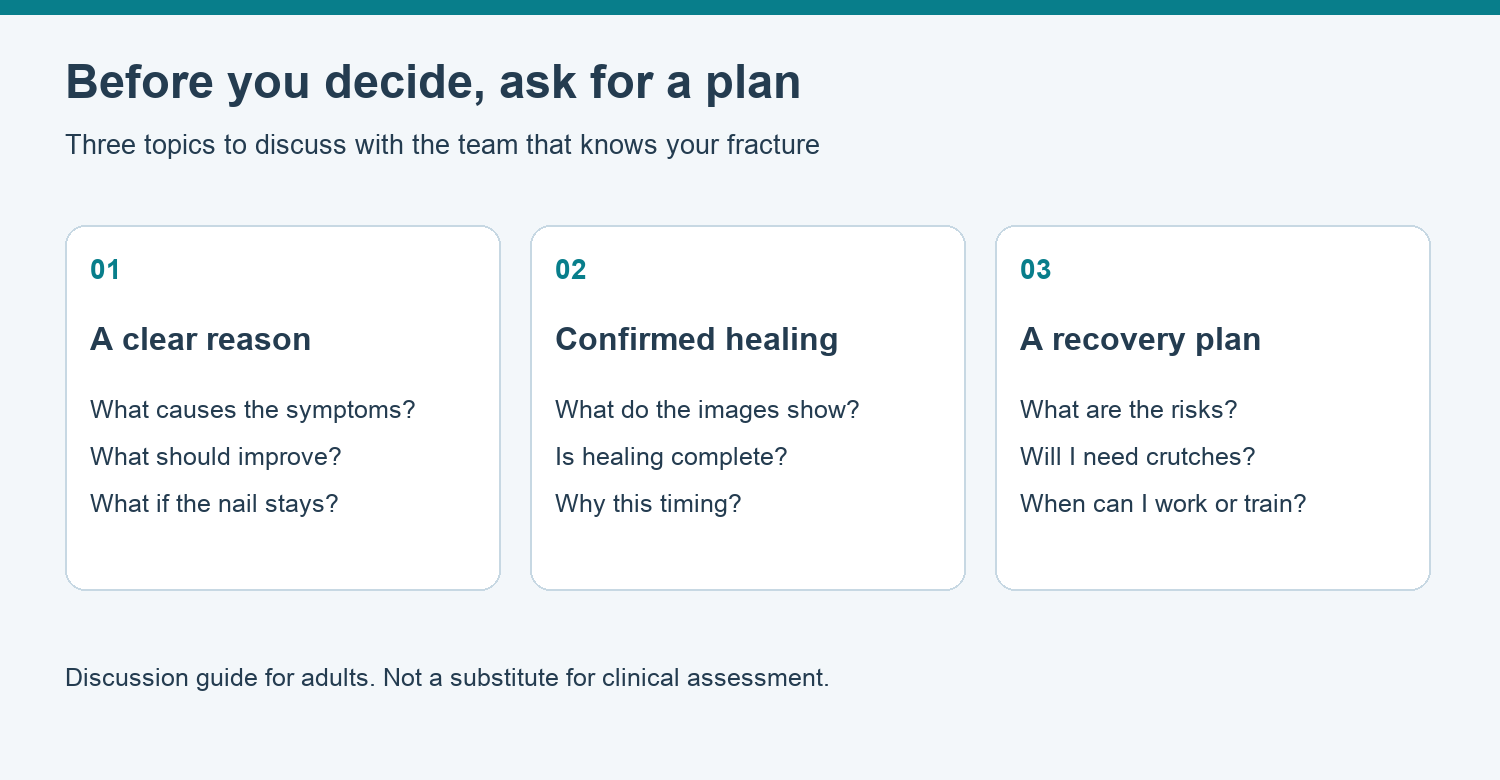
A clear reason beats a blanket rule. Before intramedullary nail removal, ask what problem the operation aims to solve, what evidence links that problem to the implant and what happens if you leave it in place. Put your own goals on the table: sleep, walking, kneeling, work or sport. Then ask how likely each goal is to improve and what could make it worse. Use a short checklsit so the visit does not end with vague reassurance. You should leave knowing why surgery is being considered, how healing has been checked and what recovery would require. If there is no clear expected benefit, that uncertainty deserves space in the decision. If symptoms are limiting your life, they deserve a proper review. Neither fear of metal nor fear of surgery should do the thinking for you. Decide with the orthopaedic team that knows your injury.