

For decades, orthopedic surgery followed a simple philosophy: bigger exposure meant better visualization. Larger incisions. More soft tissue dissection. More blood loss. More pain. More recovery time.
Today, that philosophy is being challenged.
Across trauma surgery, spine surgery, sports medicine, and joint reconstruction, Minimally Invasive Surgery (MIS) is rapidly replacing traditional open procedures. Hospitals are demanding it. Surgeons are adopting it. Patients are actively searching for it.
The reason is brutally simple:
Patients want faster recovery, less pain, and better cosmetic outcomes.
In a healthcare environment increasingly focused on efficiency and value-based care, Minimally Invasive Orthopedic Surgery is no longer a trend.
It is becoming the new standard.
The Rise of Minimally Invasive Surgery in Orthopedics
The growth of Minimally Invasive Surgery did not happen overnight.
It emerged from a combination of technological innovation, surgeon experience, and patient demand.
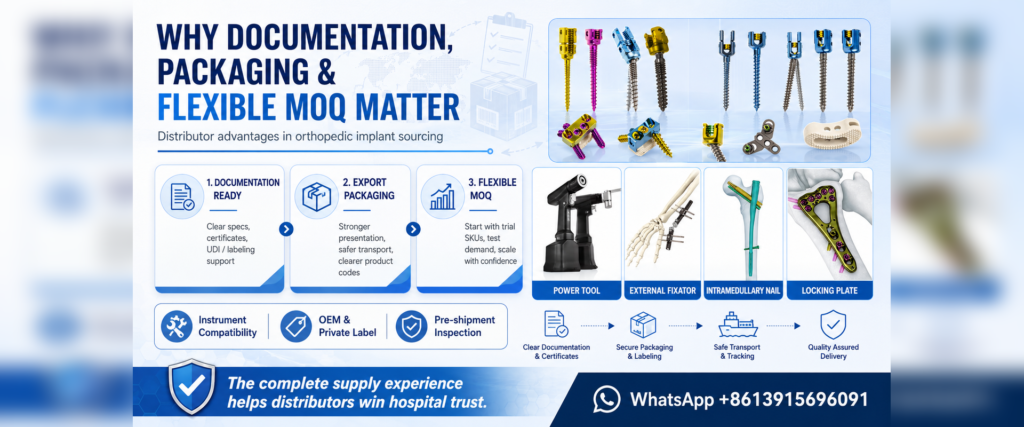
Twenty years ago, many complex fractures required extensive surgical exposure. Today, specialized orthopedic implants, locking plate systems, intramedullary nails, and advanced imaging technologies allow surgeons to achieve stable fixation through remarkably small incisions.
Modern orthopedic trauma care increasingly emphasizes:
- Preservation of soft tissue
- Reduced surgical trauma
- Faster rehabilitation
- Lower infection risk
- Improved functional outcomes
This shift is supported by organizations such as the American Academy of Orthopaedic Surgeons (AAOS), which continues to highlight advancements in minimally invasive techniques across multiple orthopedic specialties.
The reality is undeniable.
The future belongs to procedures that achieve excellent clinical results while causing the least possible disruption to the patient’s biology.
And that is exactly where Minimally Invasive Surgery excels.
Why Patients Are Driving the MIS Revolution
Patients today are more informed than ever before.
They research procedures online. They compare treatment options. They ask surgeons difficult questions.
Most importantly, they want results.
When given a choice between a large surgical incision and a smaller one that delivers similar or better outcomes, the decision becomes obvious.
The advantages of Minimally Invasive Orthopedic Surgery are highly attractive:
- Smaller scars
- Reduced postoperative pain
- Lower blood loss
- Shorter hospital stays
- Faster return to work
- Earlier rehabilitation
For active adults and younger trauma patients, recovery speed often matters as much as the surgical outcome itself.
A construction worker cannot afford six extra weeks away from work.
An athlete cannot tolerate prolonged muscle damage.
A business executive wants to resume normal activity as quickly as possible.
These expectations are fundamentally changing orthopedic treatment strategies worldwide.
Surgeons who ignore this shift may find themselves increasingly disconnected from modern patient expectations.
How Orthopedic Implants Enabled Minimally Invasive Surgery
Technology is the engine behind every major transformation in medicine.
The growth of Minimally Invasive Surgery would not be possible without advances in orthopedic implants and surgical instrumentation.
Traditional implants often required large exposures to achieve accurate placement.
Modern systems are different.
Today’s orthopedic implant manufacturers design products specifically for MIS applications:
- Anatomical locking plates
- Percutaneous fixation systems
- Cannulated screws
- Intramedullary nail systems
- Modular external fixators
- Carbon fiber fixation technologies
These innovations allow surgeons to stabilize fractures while minimizing disruption to surrounding tissues.
The concept is elegant.
Rather than forcing biology to adapt to surgery, surgery adapts to biology.
As implant design evolves, the ability to perform increasingly complex procedures through smaller approaches continues to expand.
What seemed impossible ten years ago is becoming routine today.
Trauma Surgery Is Leading the Transformation
Few specialties have embraced Minimally Invasive Surgery as aggressively as orthopedic trauma.
Historically, fracture treatment often involved extensive exposure of the fracture site. While effective, this approach sometimes compromised blood supply and increased soft tissue injury.
Modern trauma principles focus on biological fixation.
Instead of stripping bone and soft tissue, surgeons now prioritize:
- Indirect reduction techniques
- MIPO (Minimally Invasive Plate Osteosynthesis)
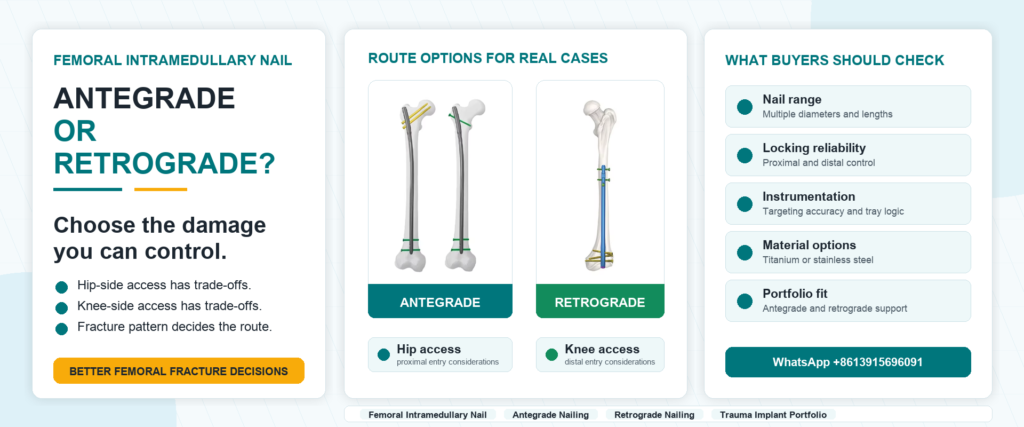
- Intramedullary fixation
- Damage control orthopedics
- Temporary external fixation
The objective is clear.
Preserve the healing environment.
A fracture does not heal because of metal.
It heals because biology remains intact.
This principle has dramatically influenced the design of modern fracture fixation systems, driving demand for advanced trauma implants capable of supporting minimally invasive techniques.
As a result, trauma surgery has become one of the fastest-growing segments within the global orthopedic market.
The Economic Advantage Hospitals Cannot Ignore
Hospitals are under tremendous financial pressure.
Healthcare systems must improve outcomes while controlling costs.
This creates a powerful incentive to adopt Minimally Invasive Surgery.
Why?
Because better efficiency directly impacts profitability.
MIS procedures often deliver:
- Reduced operating room utilization
- Lower complication rates
- Shorter inpatient stays
- Faster patient turnover
- Reduced rehabilitation expenses
Every additional hospital day costs money.
Every postoperative complication consumes resources.
Every surgical infection creates financial risk.
By reducing these burdens, Minimally Invasive Orthopedic Surgery aligns clinical excellence with economic sustainability.
Hospital administrators recognize this.
Procurement teams recognize this.
Insurance providers recognize this.
The economic argument supporting MIS is becoming nearly as compelling as the clinical one.
Emerging Technologies Are Accelerating MIS Adoption
The next decade may transform orthopedic surgery even more dramatically than the last.
Several technologies are accelerating the evolution of Minimally Invasive Surgery:
Robotic-Assisted Surgery
Robotics improves precision, implant positioning, and surgical planning.
Artificial Intelligence
AI-powered imaging analysis supports surgical decision-making and workflow optimization.
3D Printing
Patient-specific implants improve anatomical matching and procedural accuracy.
Smart Navigation Systems
Advanced navigation enhances implant placement through smaller surgical corridors.
Together, these technologies create a powerful ecosystem supporting safer, faster, and more reproducable procedures.
The surgeon of tomorrow may operate through smaller incisions while achieving levels of precision previously unattainable.
That future is arriving faster than many expect.
Challenges That Still Remain
Despite its advantages, Minimally Invasive Surgery is not without challenges.
The learning curve can be steep.
Limited visualization requires advanced technical skills.
Improper technique may increase risks such as:
- Malreduction
- Implant malposition
- Neurovascular injury
- Prolonged operative time during early adoption
Surgeon training therefore remains essential.
Technology alone does not guarantee success.
Experience matters.
Judgment matters.
Execution matters.
The best outcomes occur when modern implants, advanced technology, and surgical expertise work together.
MIS is a powerful tool—but it is not magic.
The Future of Orthopedic Surgery Is Smaller, Smarter, and Faster
The dominance of Minimally Invasive Surgery reflects a broader transformation in healthcare.
Patients demand faster recovery.
Hospitals demand greater efficiency.
Surgeons demand better tools.
Manufacturers continue developing innovative orthopedic implants, trauma fixation systems, and surgical technologies that make smaller-incision procedures increasingly effective.
The result is a powerful momentum that continues to reshape orthopedic practice worldwide.
The question is no longer whether MIS will dominate orthopedics.
The question is how quickly every orthopedic specialty will adapt.
Those who embrace this evolution will lead the future of musculoskeletal care.
Those who resist it may soon find themselves practicing yesterday’s surgery in tomorrow’s operating room.
Conclusion
Minimally Invasive Surgery is dominating orthopedics because it aligns perfectly with modern healthcare priorities: faster recovery, lower complications, improved efficiency, and superior patient satisfaction. As implant technology, robotics, AI, and surgical techniques continue advancing, MIS will become the cornerstone of orthopedic trauma, spine surgery, sports medicine, and joint reconstruction worldwide.