

Discover why locking plates changed trauma surgery and how modern locking plate systems improve fixation, reduce failure, and boost outcomes. OEM solutions available for global distributors.
Why Locking Plates Changed Trauma Surgery—and Why Buyers Are Switching Fast
Let’s be direct.
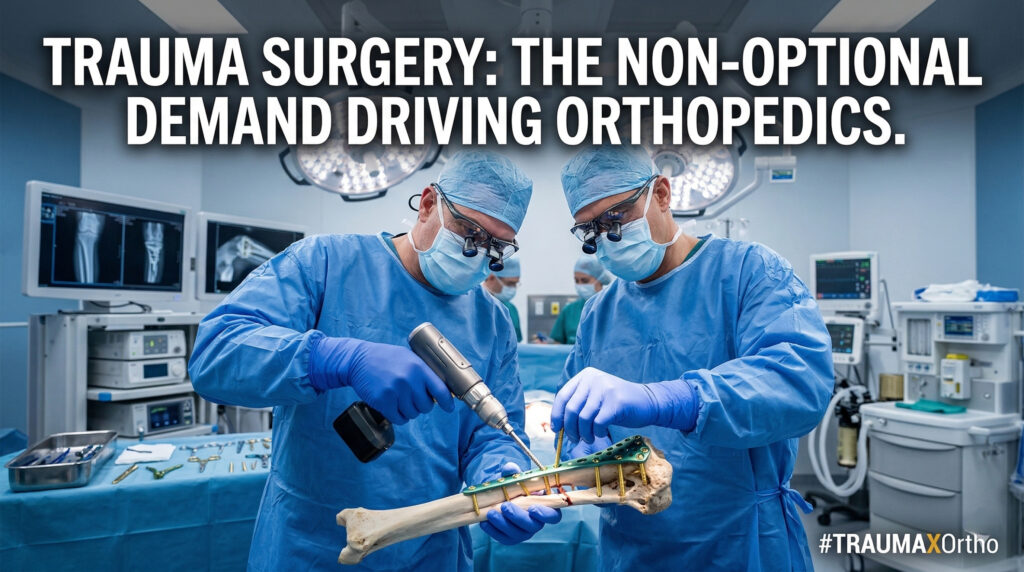
The reason why locking plates changed trauma surgery is not academic.
It’s commercial. Clinical. And brutally practical.
Traditional plates fail where modern trauma care cannot afford failure:
- osteoporotic bone
- comminuted fractures
- high-load early mobilization
Surgeons don’t want theory. They want predictable outcomes.
And that’s exactly what locking plates deliver.
Instead of relying on friction, they create a fixed-angle construct—a stable mechanical system that works even when bone quality is poor.
According to the AO Foundation, modern fixation must preserve biology while ensuring stability.
That’s not optional anymore.
It’s the new standard.
The Real Advantage: Why Locking Plates Changed Trauma Surgery Outcomes
Most distributors still sell “products.”
Top distributors sell outcomes.
Understanding why locking plates changed trauma surgery means understanding what surgeons actually care about:
- Faster recovery
- Lower failure rates
- Fewer revision surgeries
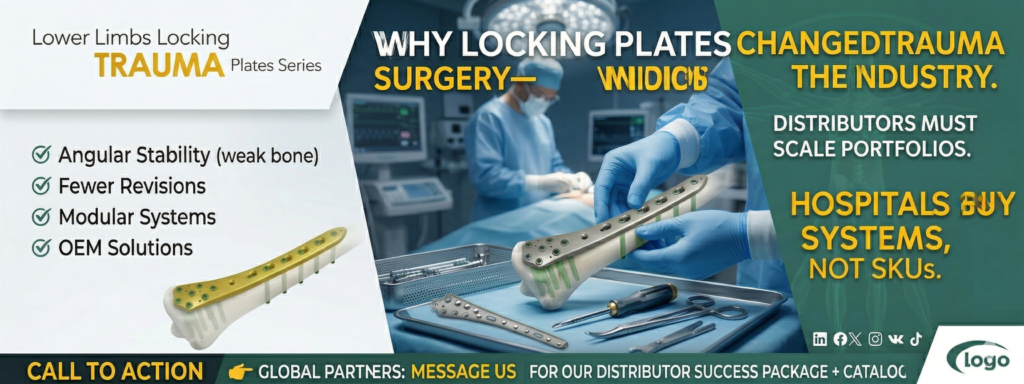
Locking plate systems deliver:
✔ Angular stability even in weak bone
✔ Reduced screw loosening
✔ Better alignment retention
✔ Compatibility with MIPO techniques
This is why hospitals are shifting purchasing strategies.
Not because locking plates are “new.”
Because they reduce risk.
And in trauma surgery, risk is everything.
Where Locking Plates Win (And Where They Don’t)
Let’s cut through marketing noise.
Yes, locking plates changed trauma surgery—but only when used correctly.
🔥 Best use cases:
- Osteoporotic fractures
- Distal femur / proximal tibia fractures
- Periarticular fractures
- Comminuted fractures
⚠️ Common mistakes:
- Overly rigid constructs → delayed healing
- Poor screw planning → mechanical failure
- Overuse in simple fractures
👉 The insight:
Surgeons don’t need more implants.
They need better decision-making tools.
And distributors who understand this… win long-term contracts.
Why Distributors Are Moving to Modular Locking Plate Systems
Here’s the business side nobody talks about.
Hospitals are no longer buying single SKUs.
They are buying systems.
Because why locking plates changed trauma surgery is also why procurement is changing:
- Standardization across procedures
- Reduced inventory complexity
- Faster surgical workflows
Modern locking plate platforms now offer:
- Multi-anatomical compatibility
- Unified instrumentation
- Streamlined screw systems
- OEM branding flexibility
👉 Translation:
If your product line isn’t system-based,
you are already behind.
From Product to Platform: The New Competitive Advantage
This is where most suppliers fail.
They sell:
❌ Individual plates
❌ Isolated SKUs
❌ Price-based competition
Winning companies sell:
✔ Complete trauma solutions
✔ Integrated plate + screw systems
✔ Surgeon-friendly workflows
Because the real reason why locking plates changed trauma surgery is not just biomechanics.
It’s workflow efficiency + surgical confidence.
And those are what hospitals actually pay for.
How to Choose the Right Locking Plate Supplier (Buyer Checklist)
If you’re a distributor or hospital buyer, stop asking only about price.
Ask this instead:
✅ System Capability
- Does it cover trauma indications (upper, lower limb)?
✅ Mechanical Reliability
- Proven angular stability?
- Fatigue resistance?
✅ Surgical Efficiency
- Instrument simplicity?
- Time-saving design?
✅ Customization
- OEM / private label available?
✅ Regulatory Compliance
- CE / ISO certification?
👉 Because a cheap implant that fails
is the most expensive mistake you can make.
The Bottom Line: Why Locking Plates Changed Trauma Surgery—and Your Business
Let’s be honest.
This isn’t just about implants.
It’s about who adapts faster.
- Surgeons are upgrading techniques
- Hospitals are upgrading systems
- Markets are upgrading expectations
So the real question is:
👉 Are you still selling products?
👉 Or are you building a trauma portfolio that scales?
💬
Call to Action (High Conversion Trigger)
If you’re:
- Expanding your orthopedic trauma portfolio
- Looking for a reliable locking plate OEM partner
- Entering emerging markets with competitive pricing
👉 Comment LOCKING SYSTEM or message me directly.
We’ll send you:
✔ Full locking plate catalog
✔ Market-ready pricing strategy
✔ Distributor support package
🔥
Final Thought
Locking plates didn’t just change trauma surgery.
They changed who wins in this industry.
And that window… is still open.
But not for long.
More info.